RISING DAMP
Damp can come from any direction and moisture that comes from the ground is called rising damp. All buildings in the UK should have a Damp Proof Course (DPC) fitted close to the ground level which forms a barrier that ground moisture cannot penetrate. Older London homes would typically have a bitumen strip inserted between brickwork courses at ground level and should that membrane be damaged in any way, moisture can rise up the walls with a capillary action. Rising damp can cause significant damage to timber, plaster and render, especially if not addressed in a timely manner.
Penetrating damp is often mistaken for rising damp and that can lead to unnecessary treatments that make the problem worse; rising damp can become a health hazard that leads to black mould.
If you suspect rising damp might be present in your London home, call London Damp Specialists on 020 8945 5547 or complete the form on this website.
Signs of Rising Damp
The tell-tale signs of rising damp include the following;
- Peeling wallpaper – Moisture compromises the adhesive on wallpaper and should you notice wallpaper peeling away from the wall, you need to contact London Damp Specialists to arrange for one of our certified surveyors to inspect the property.
- Bubbling paint – Paint, especially emulsion, tends to bubble or flake when damp is present; small bubbles can appear, so check skirting boards and window frames, as this is a sure sign that moisture has penetrated the interior.
- Dry cracks in plaster – Known in the trade as blown plaster, the material splits and falls away from the wall, if damp is present, plaster might crumble, so be vigilant with your inspections. We offer an independent survey by a certified damp surveyor and should we see signs of rising damp damage, we investigate and pinpoint the origin. While we only provide surveys and reports, we do have a close working relationship with the best damp-proofing contractor in London.
- Musky odour in the house – High humidity and lack of ventilation provide the perfect environment for mould and mildew to thrive, which creates a stale, musky smell. If you notice this, it is time to book an independent damp survey in London from a leading contractor with many years of hands-on experience in identifying sources of moisture within London homes.
It is essential to have a property surveyed for damp if you are going to make an offer and if you are selling your London home, an independent damp survey report showing a green light will help the sale.
Causes of Rising Damp
Ground moisture will be absorbed by building materials, with capillary action drawing the moisture upwards and inwards; there are many ‘wet’ areas in our capital where rising damp is a real issue.
Bricks are porous by design and this makes for a target for ground moisture; every building should have a DPC installed at ground level to prevent moisture passing this barrier and rising up the walls. Old age or ground movement can cause DPC to become damaged and damp will shortly follow. The sooner you detect rising damp, the better, which is why you should book an independent damp survey from a company that leads the way regarding damp inspections.
A flood would certainly cause rising damp, even for a short while, if the water level exceeds the DPC, rising damp sets in. You would be surprised at how fast moisture can travel through render, bricks and plaster.
Excavating near the building can easily cause DPC membrane to tear and by the time you see the signs, a lot of damage has occurred. It is not uncommon to find a row of terraced houses that all suffer from a single DPC separation, if the ground is wet, the damp continues to spread. Regular independent damp surveys in London give homeowners peace of mind, if you are wondering how to find an independent damp surveyor near me, we cover every London Borough and you receive a detailed report within 24 hours.
Range of Rising Damp Solutions
Damp-proofing demands sourcing the origins of moisture; if damp is rising up the walls, it is rising damp, however, if the moisture is coming from the exterior, this is known as penetrating damp, which requires different treatment than rising damp.
Inadequate solutions
Some London homeowners think spreading a waterproof cement coating on the affected wall and replastering is what’s required, however, this will not stop moisture rising from the ground. It is imperative to know the source of moisture before making a recommendation, damp-proofing in London comes in many forms and the wrong treatment would be an expensive mistake.
Damp Proof Course
The cause of rising damp could be something as simple as leaving a porous object next to a wall, which can transfer the moisture below the DPC, giving it a pathway to the building and rising damp occurs. Building a patio could cause the DPC membrane to tear and if that happens, ground moisture creeps up the walls; the solution is to repair the DPC or inject a foam DPC into a cavity wall. Building a small structure onto the main house will lead to rising damp if DPC is not used, with moisture rising up the main structure. In some cases, the best solution is to raise the level of the DPC, which might mean using injectable foam that prevents moisture penetration; this is often recommended in older terraced properties in London.
Adjoining Properties
If you live in a terraced or semi-detached house, damp might be coming from an adjoining property, a small holding wall could be all it takes to bridge a DPC and allow moisture to run riot. Our damp specialist would provide you with a detailed report, citing the origin of the moisture, while we also provide a quote for remedial work. We have a close relationship with some of the best damp-proofing outfits in London.
Dealing with Rising Damp Damage
Interior plaster crumbles when moisture is present and that usually means removing the damaged plaster and replastering with a waterproof product. Remedial work should not be carried out until the source of the moisture has been repaired; our surveyor advises the customer on the best course of action and can facilitate communication with a trusted damp-proofing specialist in London.
Timber & Plaster Damage
Rising damp can seriously damage timber door and window frames, leading to the formation of mould and mildew. The type of paint you use has an impact on further instances of damp; using a waterproof paint would create a barrier; allow it to dry thoroughly before adding more coats of paint. The best solution might be to remove all plaster from a wall, prepare the substrate, then apply a waterproof cement coat, which is followed by a skim of plaster. When the wall is completely dry, you can paint or wallpaper.
Rising Damp: Prevention Strategies
The core of rising damp prevention lies with the DPC; in older London homes, this would be a thick layer of bitumen strip, which is put between the first couple of brick courses. This can degrade over many years, especially in wet areas with a low water table; if the ground moves, the DPC membrane can split and damp has a path to the building. Booking our independent damp survey will pinpoint the origin of the dampness, then we can recommend a solution, which might be a new DPC, or simply repairing a single point. Unless you have extensive building knowledge, you should call in an independent damp survey specialist in London; only then can you make an informed decision.
Effective Rising Damp Treatments
These might include the following:
- Plaster removal & substrate preparation
- Injecting a chemical DPC
- Adding salt neutraliser
- Waterproof render
- Replastering with waterproof cement
- Final skim plaster
Rising Damp is a Real Threat to London Homes
If you are looking to acquire a home in London, make sure you contact London Damp Specialists on 020 8945 5547 or complete the form at the bottom of this page.
If you are planning an extended trip and you would like the survey done in a few weeks/months, this is not an issue. All we need is unrestricted access to the property for a few hours to complete the inspection and you receive a detailed report the next day. We aim to fit in with your timeline and if you wish to postpone the survey for any reason, that is not a problem.
The short answer is yes. We strive to complete every project according to projected timelines and if that means working outside of regular hours in order to finish an assignment, that is what we do.
In general, damp-proofing work is not covered in a home insurance policy, however, the damage caused by damp would be covered. We offer a 10-year damp insurance from a reputable insurer, which covers you for everything.
Take a row of terraced Victorian houses; if one has an issue with the DPC and damp comes up the walls, this can eventually impact next door. If you have all the signs of rising damp, yet the DPC is intact, it might be that the source is next door, which needs investigating. Building an extension can remove the DPC barrier, if the build is above the DPC course.
Damp Survey Costs
Transparent pricing with no hidden fees for our independent, unbiased surveys.

Level 1
What’s included:
- Inspection of walls
- Inspection of floors
- Inspection of ceilings
- Leak inspection of drains and plumbing
- Damp information and prevention guide

Level 2
What’s included:
- Everything in Level 1
- Dry rot inspection
- Wet rot inspection
- Woodworm inspection
- Damp information and prevention guide
Level 3 (Most Popular)
What’s included:
- Thermal Imaging
- Air humidity testing
- HD boroscope camera
- Brickwork pointing inspection
- DPC inspection
- Ventilation flow test on extractor fans
- 4K drone imagery roof, chimney stack
and guttering inspection - Structural condition inspection
- Inspection of walls
- Inspection of floors
- Inspection of ceilings
- Leak inspection of drains and plumbing
- Dry rot inspection
- Wet rot inspection
- Woodworm inspection
- Damp information and prevention guide
Survey Add Ons
Add On 1
Laboratory analysis Of plaster identifies hygroscopic salts such as chlorides and nitrates. which indicate whether damp is caused by rising groundwater or by plumbing leaks, This testing removes guesswork, allowing the exact source of moisture to be identified so the correct treatment is applied rather than carrying out unnecessary damp-proofing work.
Add On 2
qPCR DNA mould testing detects microscopic mould spores that are invisible during a normal inspection and van remain hidden behind walls, floors. or inside building rkaterials. It identifies the exact mould species present and the contamination level, allowing hidden mould problems to be confirrned and properly treated before they affect the property or occupants’ health.
Qualifications: All our surveyors are PCA and CSRT qualified for remedial treatments and also CSSW qualified for structural waterproofing.
Next day report: You will receive the report within 24 hours of the inspection taking place.
These are the tools we use
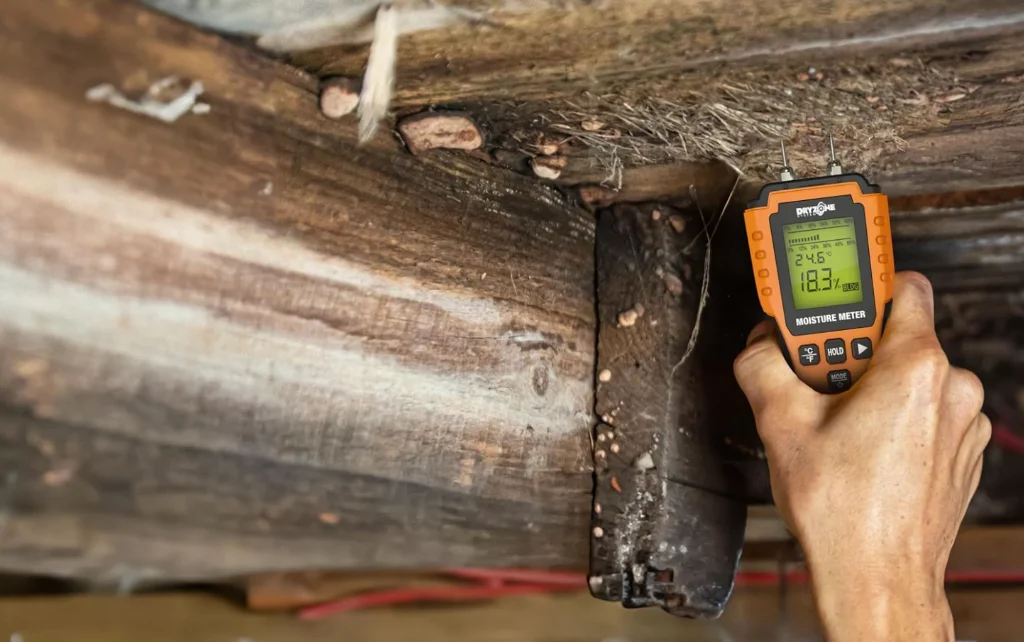
Damp Meter
A damp meter is a diagnostic tool used to detect and measure moisture levels within building materials such as plaster, brick, timber, and concrete.

Borescope camera
borescope camera is a small inspection camera attached to a flexible semi-rigid cable that allows you to see inside areas that are otherwise inaccessible.

Drone Inspection
A drone is a remotely operated aerial device equipped with a camera that allows visual inspection from above without the need for scaffolding or ladder.
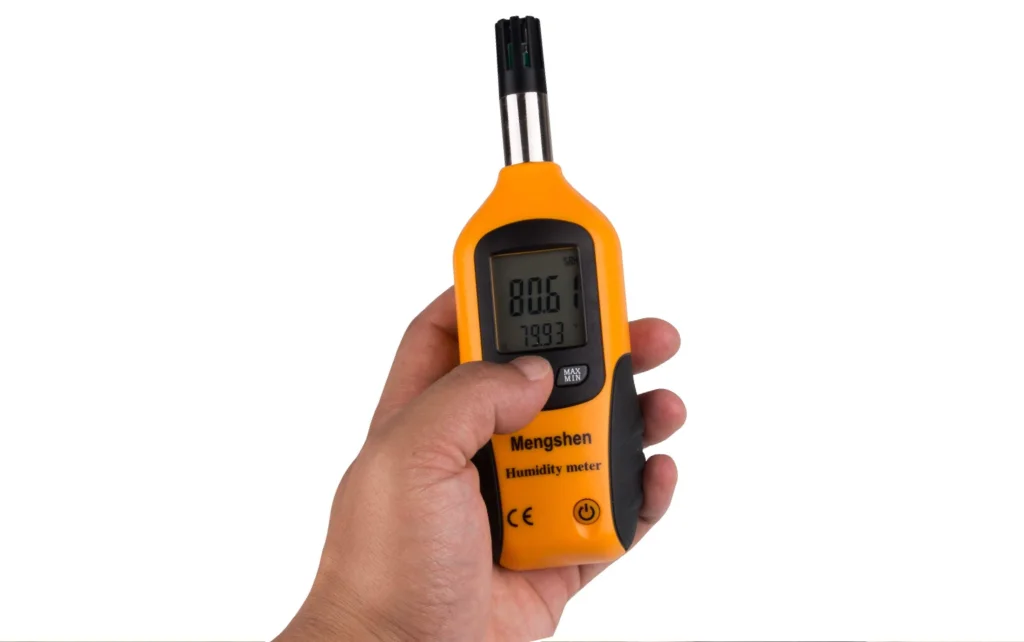
Air Humidity Sensor
Air humidity sensor measures the amount of moisture present in the air, expressed as relative humidity (RH) in percentage. It helps determine whether indoor conditions are contributing to condensation, mould growth, or damp-related issues.
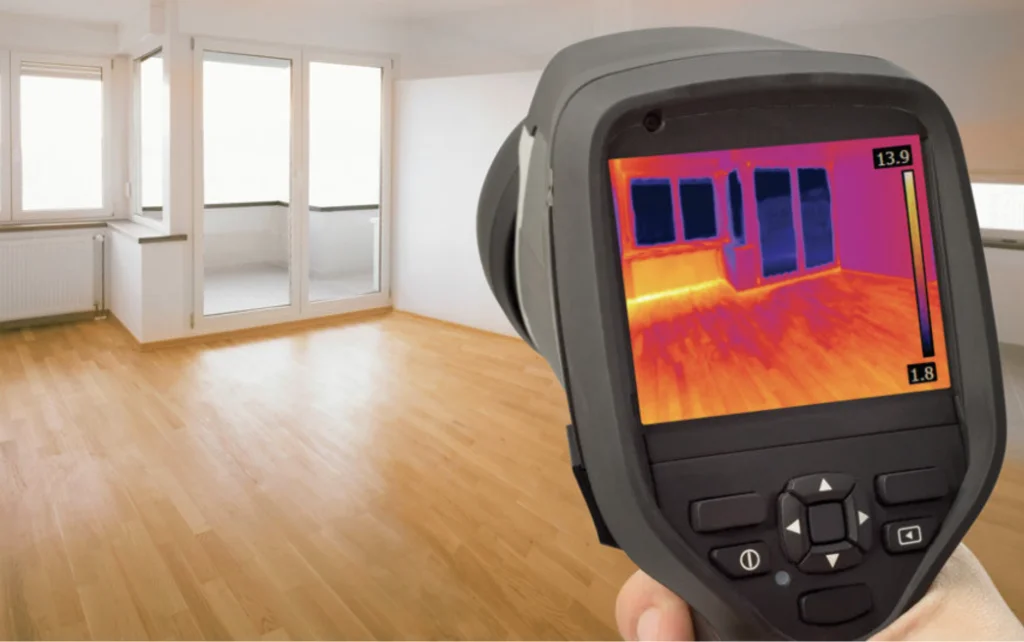
Thermal Imaging Camera
A thermal imaging camera detects temperature differences on surfaces by using infrared technology to produce a heat map image. In damp investigations, it helps identify cold spots, moisture intrusion, insulation defects, thermal bridging and leaks.
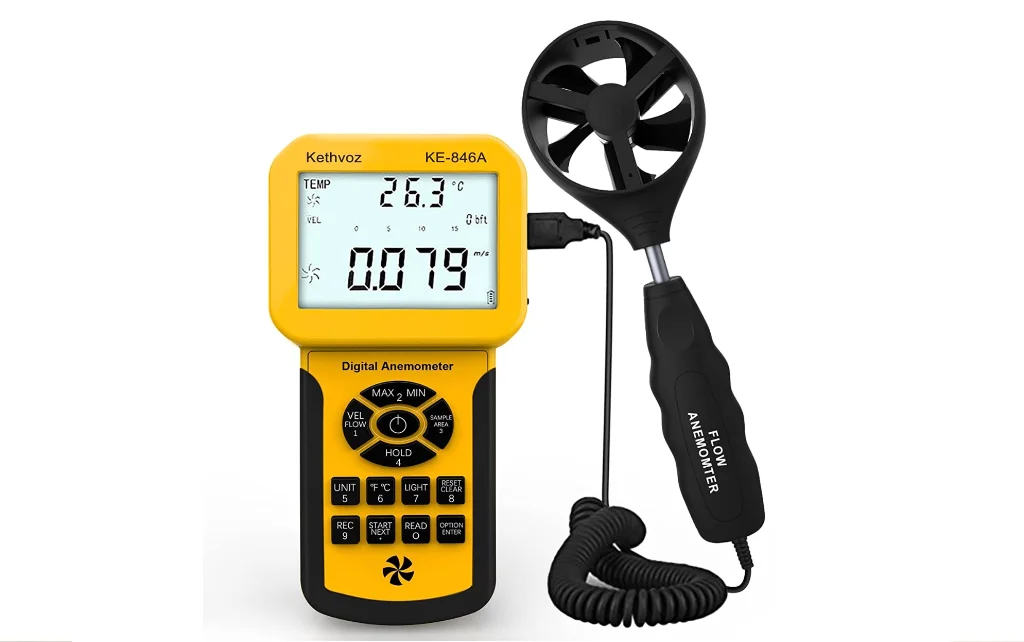
Air Flow Ventilation Detector
An air flow ventilation detector measures the movement and volume of air passing through vents, extractor fans, and air bricks. It confirms whether ventilation systems are working properly and achieving adequate air changes within a room. Poor airflow leads to trapped moisture, high humidity, condensation on cold surfaces, and ultimately mould growth.

Mould Lab Swab Testing
A mould swab test is carried out to confirm the presence of hidden mould growth and identify the specific species involved. Surface mould is not always visible, especially behind furniture, inside cavities, or within ventilation systems. Laboratory analysis of a swab sample determines whether active mould spores are present and what type they are, which helps assess potential health risks and decide the correct remediation approach rather than relying on visual assumption alone.
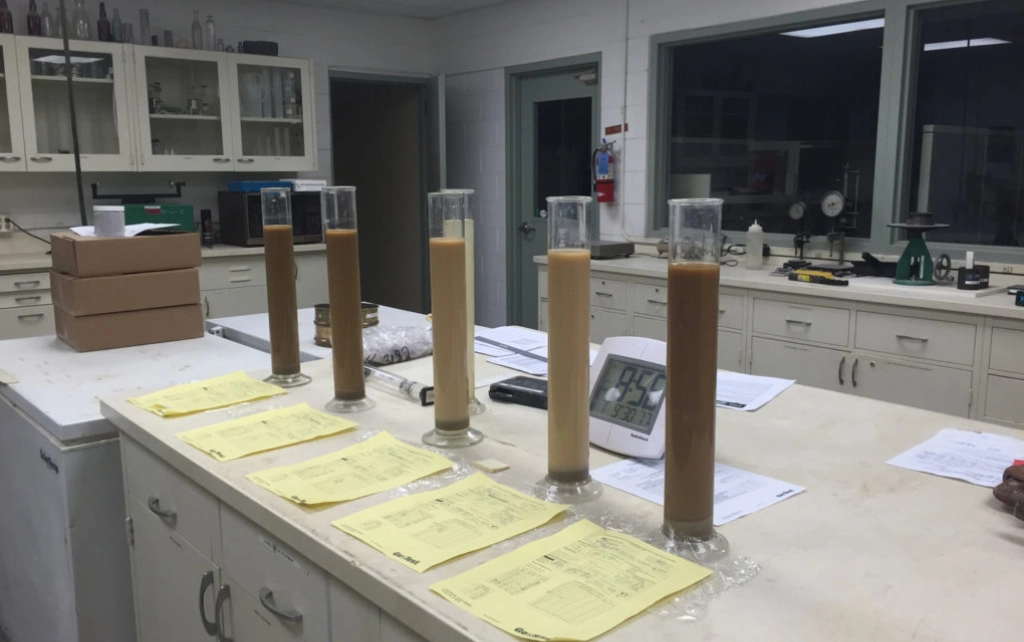
Lab Analysis of Plaster
Laboratory analysis of plaster is used to identify the type of salts present within the material, typically chlorides and nitrates. The presence and concentration of these salts help determine whether the moisture source is consistent with rising damp, ground contamination, or another forms [sic] of water ingress. such as mains water leak, This removes guesswork and prevents misdiagnosis, ensuring the correct remedial treatment is specified rather than applying unnecessary or ineffective solutions.
Contact Us
For an in-depth survey of your property or simply to talk to one of our damp proofing specialists in London
Book and Pay for a survey
If you are ready to book a survey and pay, please complete this form: